All throughout history there are accounts of people being terrified by the blood red glow of the moon or the uncanny darkening of the sun during an eclipse.
Some people were terrified that the sun, their source of light and life, was dying right before their eyes; or perhaps there was a celestial monster taking a bite out of the sun. They flaming arrows to reignite the dying sun. They banged pots and pans to scare away the monster. They shrieked, they shouted and when nothing seemed to work they hid in their huts and caves. The sun would soon be gone, leaving them all alone in this dark world.
Then came the scientists, from the ancient Greeks to our modern astronomers, who told the people they were misinformed. “It’s just the moon blocking the sun!” Wear some eclipse glasses and your eyes won’t get hurt.
That made a lot of people feel better. But not everyone was convinced.
The Eskimo were aware that the eclipse was only a temporary event, but they also knew that war or plague often followed eclipses. While a shaman climbed “to the moon” to find out which calamity was heading their way, the men in the camp prepared for war with neighboring tribes, and the women hurriedly turned all their cooking vessels upside down to prevent any “unclean influence” that might descent from the eclipse from being caught in them. They may have been ignorant of science, but they wanted to be prepared.
The Chaldeans had every advantage over the Eskimo. They were expert astronomers. Through their detailed recordkeeping they discovered the saros (the pattern by which solar eclipses repeat) and invented an early form of calculus, but their most important discovery was that eclipses speak of judgment for sin. Their preparations to avoid that judgement could go to the extreme, up to and including human sacrifice if the eclipse spelled the doom of a monarch. Then they waited.
When totality came to an end, the superstitious felt better. All their efforts seemed to pay off. The monster stopped eating the sun. The king was still alive. People popped their heads out of their huts to find the world outside bright and sunny. The scientists packed up their equipment and stored their lies away for the next eclipse.
Then the judgement came as it always does. Plague, Famine or War.
The scientists said it was a coincidence escaped from a wet market.
The superstitious panicked a second time.
The Eskimo were stymied when the plague broke out in the camp and their men fell in battle. Only after 1,000 years of rebellion, did the Chaldeans discover – there is no way with your own effort to survive the judgement forecast by an eclipse.
But there was a man named Jesus. Certainly you have heard of him. He opened the eyes of the blind. To the world he declared:
“I am come a light into the world, that whosoever believeth on me should not abide in darkness.”
John 12:46 KJV
Jesus went to the cross as the only substitute for our sins. The Bible tells us that while he was on the cross “from the sixth hour until the ninth hour there was darkness over all the land.” At the climax of this darkness Jesus cried out in the lingua franca of his day:
“Eli, Eli, lama sabachthani?”
Eli is the Chaldean name for the chief deity…
Lama is the Hebrew word for “why”…
Sabachthani is Aramaic for “forsaken me”
The word “eclipse” derives from the Greek ekleipsis, which literally means “a failing or forsaking out of the world”, but Jesus has not forsaken us. He is the light of the world, he was forsaken by God in this world, and when he rose again he gave us the power to overcome the darkness of spiritual and physical death in our own lives as well.
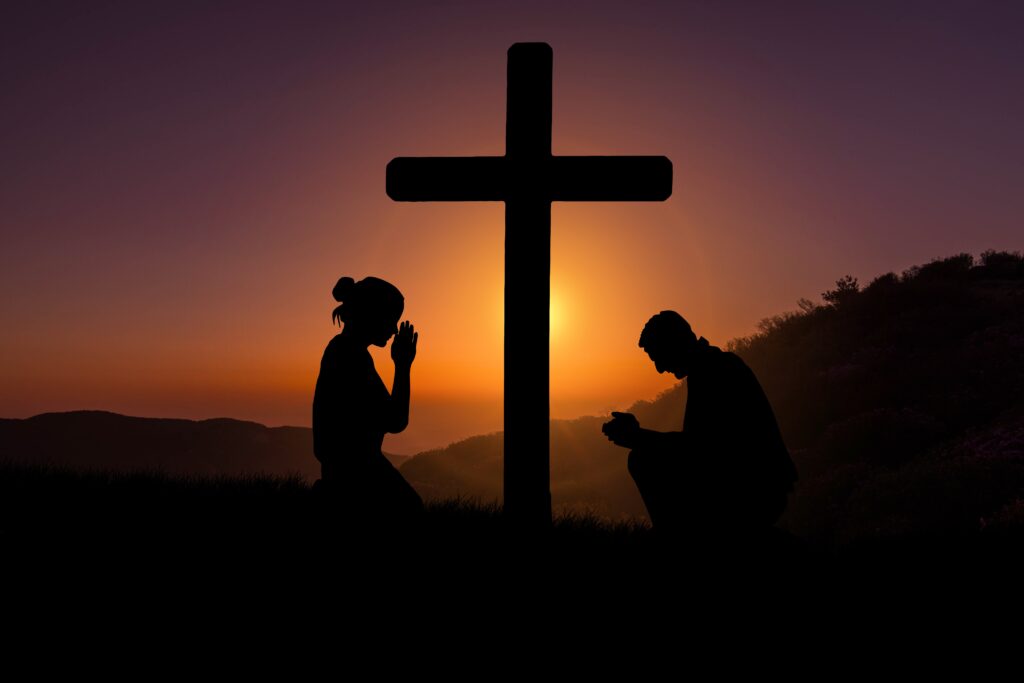
Put your trust in him to overcome the darkness of this world.


0 Comments